
As electric mobility expands beyond urban environments, a new challenge is emerging: how do you deliver energy where traditional charging infrastructure is unavailable?
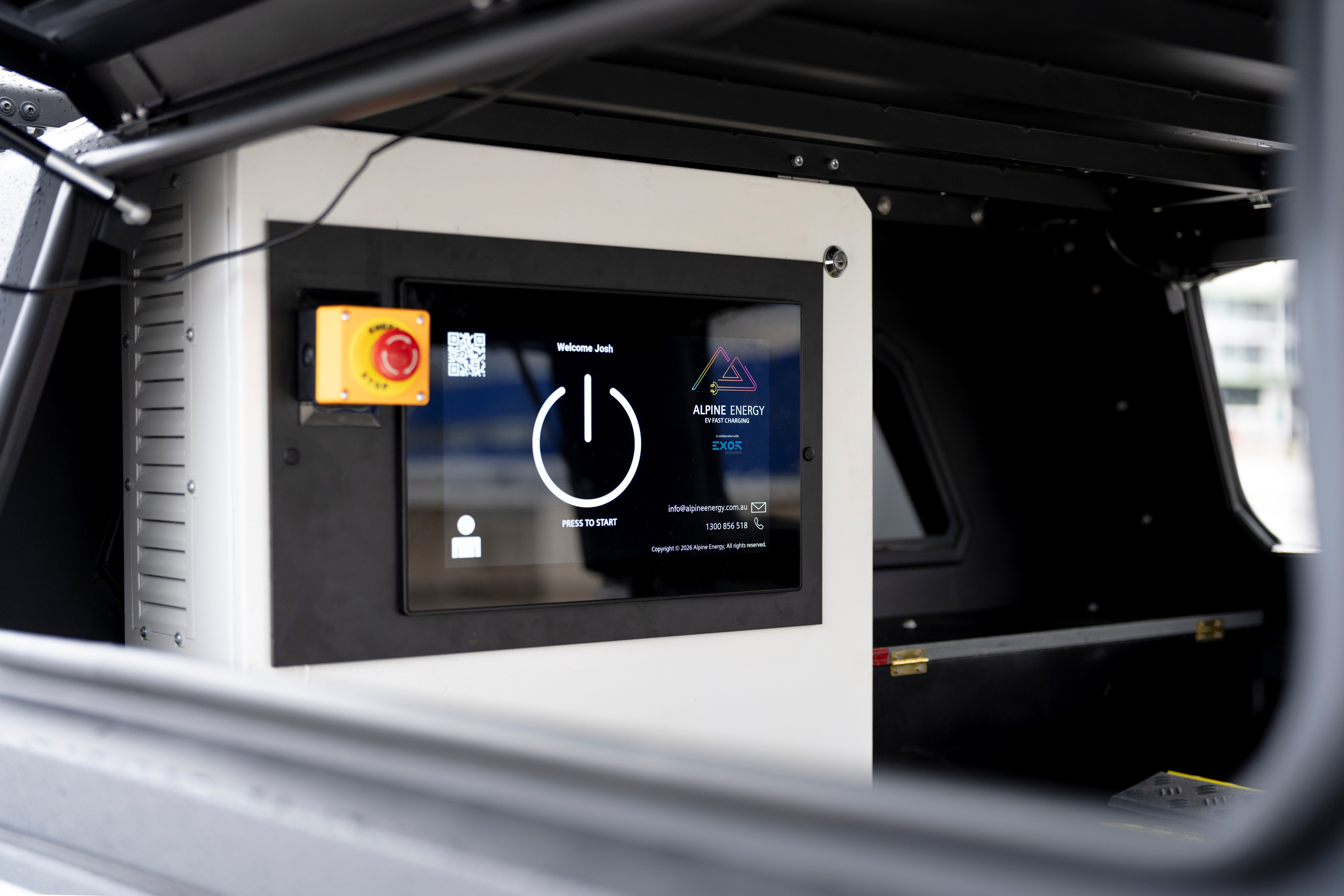
For operators working in remote locations, mining sites, industrial facilities and regional transportation networks, charging infrastructure is not always accessible when and where it is needed. This challenge is driving the development of a new generation of mobile energy platforms designed to bring power directly to vehicles rather than requiring vehicles to reach fixed charging points.
One recent example comes from Australia, where Alpine Energy has introduced the MGEN M40, a vehicle-to-vehicle (V2V) fast charging platform designed to support electric vehicles operating in remote and demanding environments. The project has already attracted significant attention from Australian media and industry observers, highlighting the growing demand for innovative approaches to energy delivery in challenging operating environments.
While the spotlight naturally falls on charging technology itself, projects like these also bring attention to another critical component that often remains behind the scenes: industrial connectivity.
Energy Platforms Are Becoming Connected Assets
Modern mobile energy systems are no longer standalone devices. They are increasingly expected to operate as connected assets capable of providing operational visibility, supporting diagnostics, enabling remote monitoring and delivering actionable data to operators.
As these platforms move from prototype to deployment, stakeholders require access to real-time information regarding availability, operating conditions, maintenance requirements and performance metrics. This is particularly important when assets operate across large geographic areas or in environments where physical intervention can be costly and time-consuming.
For this reason, industrial-grade connectivity is becoming a fundamental requirement rather than an optional feature.
Secure communications, remote access capabilities, edge computing and scalable cloud architectures are increasingly essential to support the next generation of distributed energy infrastructure.
.jpg?width=2400&height=1792&name=Image%20(6).jpg)
Connectivity as an Enabler of Innovation
At EXOR International, we have long believed that the future of industrial technology depends on the ability to connect devices, people and data in a secure and scalable way.
Through EXOR Oceania, part of the wider EXOR International ecosystem, our technologies are helping support innovative projects that require reliable industrial connectivity and digital infrastructure.
Industrial HMIs, edge platforms and connected services provide the foundation needed to collect, manage and securely distribute information across complex operating environments. Whether the application involves industrial machinery, remote assets, critical infrastructure or emerging energy platforms, the objective remains the same: transforming operational data into valuable information while maintaining reliability, security and ease of deployment.
The Next Phase of Electrification
As industries continue their electrification journey, the conversation is rapidly expanding beyond battery capacity and charging speed.
The ability to monitor, manage and support distributed energy assets remotely will increasingly determine how effectively these technologies can be deployed, maintained and scaled over time.
For organizations operating in remote environments, connectivity is becoming part of the infrastructure itself. The success of future energy ecosystems will depend not only on how power is generated and delivered, but also on how information flows between assets, operators and service providers.
Projects such as the MGEN M40 demonstrate how innovation often emerges at the intersection of multiple disciplines: energy, automation, software and industrial connectivity working together to solve real-world challenges.
.jpg?width=4040&height=3017&name=Image%20(5).jpg)
Supporting the Future of Connected Energy
The collaboration between Alpine Energy and EXOR Oceania reflects a shared commitment to enabling innovation through technology.
While Alpine Energy continues to push the boundaries of mobile charging and energy delivery, EXOR Oceania contributes industrial connectivity expertise and access to technologies designed to support reliable, secure and scalable operations.
As the Australian market continues to explore new approaches to electrification, remote operations and sustainable infrastructure, EXOR International and EXOR Oceania look forward to supporting organizations that are helping shape the future of connected industrial operations.
Because the future of energy is not only about moving power. It is also about moving information.


