
As manufacturing plants evolve into highly flexible, modular, and increasingly autonomous environments, the relationship between operators and machinery is undergoing a profound transformation. Operators today must follow the production flow, move between workstations, supervise robots or motion systems, and make adjustments precisely where intervention is needed. In this context, wireless portable HMIs offer an entirely new way to interact with machines.
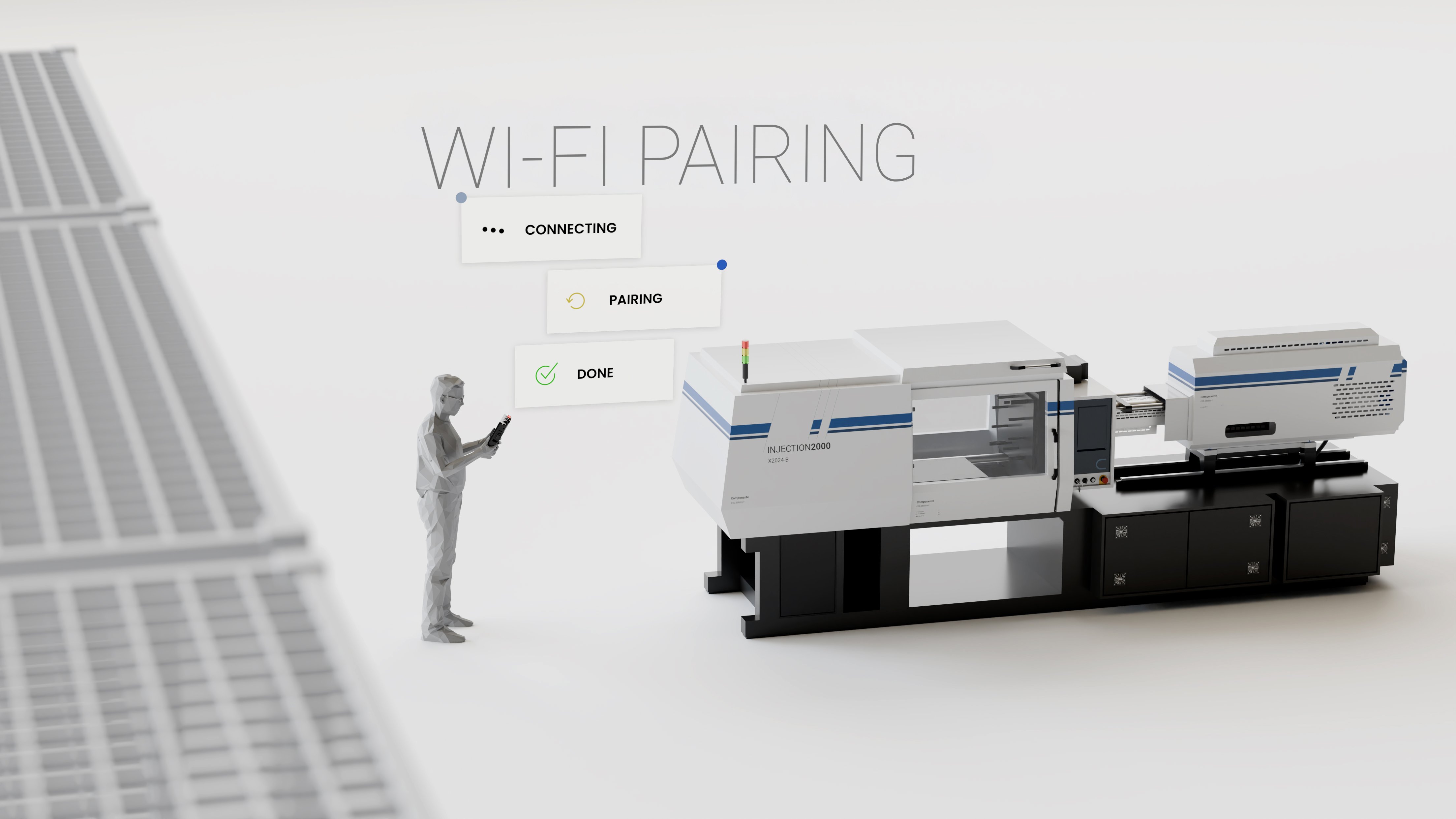
Unlike wired HMIs, wireless solutions remove physical constraints and allow operators to benefit from continuous, unrestricted movement. But the value of wireless HMIs goes far beyond convenience. They help reduce the risk of cable‑related incidents, make movement around large machines easier and safer, and support operational models that simply cannot rely on fixed panels or cabled handheld devices.
The transition toward wireless HMIs aligns with wider industry trends. As factories adopt collaborative robots, mobile automation systems, and reconfigurable production cells, the human‑machine interface must follow this mobility. A wireless portable HMI allows operators to position themselves optimally during machine setup, testing, and fine‑tuning processes. This freedom often translates into reduced commissioning times, improved safety procedures, and a smoother experience overall.
Wireless solutions, however, demand careful engineering. Radio reliability must be guaranteed even in noisy environments. Battery autonomy needs to be balanced with device weight and ergonomics. And safety must be preserved at all times, including when the device is momentarily unpaired. Modern wireless HMIs manage these aspects through sophisticated communication protocols, secure pairing systems, and emergency loop designs that remain active even if the radio link is interrupted.
In addition, wireless HMIs offer a significant advantage in terms of safety: no physical cable means no risk of entanglement or accidental pulling, a factor that is especially important when operating near moving components or within confined spaces. This contributes to a safer and more comfortable working environment, something increasingly valued as factories adopt more complex motion systems and collaborative automation.
The upcoming Wireless X7 and X10 from EXOR International have been designed specifically for this new generation of industrial mobility. These devices aim to provide intuitive, cable‑free operator interaction while maintaining the robustness and industrial reliability that EXOR International products are known for. With advanced radio communication, optimized battery architecture, and support for wireless charging, the wireless versions introduce a level of usability that takes portable HMI interaction to the next stage.
More details will be unveiled during the official launch webinar, but the direction is clear: the X7/X10 Wireless models are designed to enable a new, more natural relationship between the operator and the machine. From large manufacturing cells to mobile platforms like AGVs, wireless HMIs are a key component of a modern, adaptable factory layout.
As industries strive for higher efficiency, faster changeovers, and safer machine interactions, wireless portable HMIs represent a natural evolution. And with the arrival of EXOR International ’s X7 and X10 Wireless versions, plants now have a reliable, industry‑ready solution that supports their journey toward flexible and connected industrial operations.


